Showing posts with label Fantasy. Show all posts

Monday, February 8, 2010

Making an Appearance or Three

Back in August I mentioned a little podcast novel called The Dreamer's Thread, and said that I would be "following this one with interest."

As it turns out I did more than just follow Aura's fantastic journey. I joined her on it, very briefly.
By the power of Twitter I ended up reading the part of the gruff General Cross, recording a few lines and sending them to Starla to be edited into the podcast. Very cool indeed.

It's one thing to listen to a story but quite another to be able to step into that world and take part in it. However small a part I may have played, it says something about the dynamism of the podcast world that fans can actually become players in the stories that they're enjoying. Can't do that with TV now, can you?

Starla and her audio producer Jamie Jordan did a marvelous job juggling the many voice actors who took part in The Dreamer's Thread, including podcasters Philippa Ballantyne, Mur Lafferty, Paul Ellard Cooley, and many more. All that, and it was a great story to listen to. Not as dark and brutal as the stuff I usually enjoy, but it was fun and touching on many levels. If you haven't already, go on and subscribe.

That's not the only podcast I've been on lately, though.

On the Everyworld News last month I made an appearance as a French(ish) pirate. That was fun. Go have a listen to the news from Jim Ryan's bizarre alternate realities if you want a laugh.

That's all for now. I've been ridiculously busy so far this year so I'm rather a long way behind on my reviews, but not to worry. I'll catch up.

Congratulations must also go out to Seth Harwood and the announcement that his novel Young Junius has been picked up for publishing by Tyrus Books. I had just finished listening to YJ when the news came out, and I think that it's Harwood's most solid and important book yet.I'll be posting a more complete review of YJ shortly, but it's worth saying that I had been hoping Seth was going to deliver a 5-Star product in this book, and he did just that. Nice work, Mister Harwood.

Thursday, October 29, 2009

Sci-Fi/Fantasy Roundup

It has been a big week in Sci-Fi and Fantasy in the podcasting world, but the biggest news has to be the astounding success of JC Hutchins' second novel launch, 7th Son: Descent. The blogosphere and Twitter were virtually on fire yesterday as Hutchins' fanbase rushed bookstores and e-retailers across America to show their support for this storyteller, who has brought so many listeners so much great fiction over the past four years.
Descent rocketed up the Amazon charts, peaking at 188 overall, which is a phenomenal achievement and a credit to Hutchins and the commitment of the Beta Clone Army. Congratulations, Hutch. You worked bloody hard, and you've earned every bit.


While 7th Son is a hard act to follow, I can assure you that there are plenty of other great sci-fi and fantasy podcasts out there, hanging around for free, just waiting for your ears to find them. Here are a few of them.


Top of the charts for in-progress releases in my book right now is The Gearheart, an inspired steampunk novel brimming with brass goggles, grand airships, blazing magic, treachery, gunfights, murder and darkness.
Written, performed and produced by Alex White, with the female parts performed by Renée White, The Gearheart is a sleek production, tightly wrapping up an enthralling and brilliantly narrated piece of steampunk fiction.

Alex White also composes all the music for this podcast, and promos the music of steampunk bands at the end of each show. Never heard of a steampunk band? Well, now's your chance.

Well worth a listen. Also, be sure to hang on for the nifty little alternate universe ads at the end - Hilarious!


If you've ever wondered what a drabble is, I just learned that it's a piece of fiction written in under 100 words. So how do you write a drabble novel?
Jake Bible seems to have the idea over at Dead Mech. Written in 100 word snatches, Dead Mech builds a post-zombie-apocalypse world where the few survivors battle the undead in Mech-Warrior style battle-mechs, but it's not that simple: now the zombies have them too.

The drabble style makes for an urgent, non-stop pace to this story, only in its third episode so far. Brutal and gritty, Dead Mech is a step inside a future we should all hope never comes about. It's early days for Dead Mech right now, but so far, so good.


Scott Roche is currently releasing the second book in his Archangel Series, Legion. I have just finished Book 1, Valley of the Shadow, and it is quite an enjoyable listen. The audio quality starts out a bit patchy, but with a bit of perseverance - and a new mic for Father's Day - this picks up nicely inside of about six episodes.
Archangel is a tale of demons and those who hunt them, but it is more than just action and spectacle. Roche delves into social, spiritual and metaphysical discussions over the course of the story, drawing on the mystic and religious beliefs of several cultures to ask questions that go much deeper than the simple debate between good and evil. Archangel challenges the values of morality and ethics in a world where so much that is corrupt reigns. This is a book that is as thoughtful and incisive as it is a heart-pounding adventure.

The second volume, Legion, is a full voice-cast production, and gets off to an intriguing start as well. Looking forward to getting into that.


Weighing in for good old-fashioned fantasy, AP Stephens' book The Stolen Moon of Londor is now releasing as a podcast novel in weekly installments.
Londor is the tale of a band of heroes, set on a quest to discover what happened to one of their world's moons, which has disappeared from the sky completely. With its disappearance, the magic of the world is fading. It's up to the heroes to find it before the magic of Londor evaporates for good - that is, if they don't strangle each other or get torn apart by rampaging werewolves first.

Rooted deep in traditional sword and sorcery, Londor is a compelling tale, narrated by Richard Webster. If you like your elves dark and your heroes moody, this is the one for you. But beware - here be monsters.

This is by no means all that's going on out there, but it's what I've been soaking up in the past few weeks. If you've got a podcast that I've missed, feel free to drop a comment below with a link so I can check it out.

Tuesday, September 15, 2009

Hugh Cook: The Wordsmith and the Warrior

This article was produced as part of New Zealand Speculative Fiction Week. For more information, go to Pterodaustro Dreams.

Hugh Cook might not be a name instantly recognised by readers of the fantasy genre, but to his legion of dedicated fans across the world, mention of the man and his work inspires a sense of reverence.

Cook remains one of New Zealand’s unsung heroes of fantasy literature, despite his achievements outshining those of many of our more well-known authors. Between 1986 and 1992 Cook released his Chronicles of an Age of Darkness series, a ten-book cycle of stand-alone fantasy novels. Set on a world ruled by bloodthirsty emperors, threatened by swarms of monsters, and blessedly devoid of goblins and elves, the Chronicles capture a history of Cook’s lands and their people in a multitude of voices, spanning continents, and all occurring roughly within the same timeframe of a decade or two. Characters recur across the books, making cameo appearances from one story to the next, weaving a complex web of events that draws the reader through the series, however unrelated each volume may seem to be at a glance.

Cook was among a group of authors who eschewed the traditions of Tolkienesque high fantasy, choosing instead to write about the dark, unsavoury aspects of human nature in the grim harshness of a world bent on crushing the meek. In Cook’s world, orcs are hunted for their blubber and sea dragons are vain creatures who pretend to recite poetry in their sleep before sinking into snoring heaps. Empires are driven to war by syphilitic emperors, who are in turn murdered by warring sons. Heroism is a constant theme, usually as a partner to vanity, folly and ultimately death, and can be summed up in the immortal line, “vaunting their boasts with the blood of their lungs on their lips.”

Suffice to say that Cook rebelled, writing unorthodox fantasy in an unorthodox world. He dismantled old tropes and bent the genre like light through a smoked lens. He replaced the tired theme of good versus evil with one which instead pitted brutality against barbarism, and rarely delivered a clear victor. Cook not only rejected the clichés of the fantasy genre; he subverted them with an almost malicious glee.

To judge Cook’s success by book sales alone would be misleading, but the numbers are certainly impressive at first glance. Altogether, the Chronicles sold around 450,000 copies, and that in itself is reason for celebration for any New Zealand author. The Wizards and the Warriors, together with its US incarnation, Wizard War, sold over 160,000 copies, a phenomenal sales record for any fantasy author.
Unfortunately, as the Chronicles became less conventional and more obtuse, sales began to decline. This was compounded by the decision made by bookselling chain W.H. Smith to drop Cook’s books from their shelves when sales slowed, which inevitably led to an even steeper fall. Despite a rebounding of style and content in the last three books of the series towards more action-based storytelling, Cook had largely lost the means to supply to his mainstream audience, with sales for these three books falling to between 7,000 and 10,000 copies each. I bought all my copies of Hugh’s books in my local Whitcoulls here in New Zealand, where his books enjoyed pride of place on their shelves with every release. But if the books were not on the shelves overseas, then Cook’s fans had little chance of finding them.

Cook’s prose drew heavily on the landscape, places and mythology of New Zealand, from the legendary Taniwha of Quilth, to the Ngati Moana, to a prison called Maremoremo (after Paremoremo in Auckland). Our native flora and fauna often made cameo appearances in wild locales, including weka, kauri and rimu, to name but a few – all of this well over a decade before Peter Jackson delivered our country up to the world as Middle Earth. Cook refused to suffer from cultural cringe; he embraced our country’s uniqueness and used it to flavour his own inimitable world and style.

China Mieville, author of Perdido Street Station, sums Cook up nicely; “Hugh Cook was one of the most inventive, witty, unflinching, serious, humane and criminally underrated writers in imaginative fiction. Or anywhere.” It remains a shame that so few New Zealanders know that Cook was a Kiwi writer, but there is a good reason for this: Hugh Cook may have lived in New Zealand and written in New Zealand, but I suspect he saw the same tired faults with our nationalistic model of publishing and author recognition as he saw in the failure of the fantasy genre to redefine itself. Accordingly, after publishing Plague Summer here in 1980, he bypassed the New Zealand publishing model and went instead to the London market, where he secured publishing deals almost simultaneously for both his science fiction novel The Shift (Jonathan Cape, 1986) and the first volume in the Chronicles series, The Wizards and the Warriors (Corgi,1986).
What separated Cook from so many of his contemporaries was his ability to alter his prose style from book to book, while he never lost his unique authorial voice. Two of the Chronicles, The Wishstone and the Wonderworkers and The Wazir and the Witch, take the form of actual recorded histories, thick with the idiosyncrasies of both the imaginary scribe and subsequent editors, and are thus peppered with redactions and long, apparently unrelated diatribes. These books are full of acerbic dark wit and bleak philosophies, and represent, in some ways, Cook’s ultimate success at writing fantasy that transcended the sword and sorcery models of the genre. For all their apparently random digressions beyond the story, these two books might be seen as the pinnacle of Cook’s genius, for there is a depth to these tales that no amount of Feistian swashbuckling or Eddingsesque adventuring could rival. Some readers even suggested that ‘Hugh Cook’ was not one writer but many, a collaboration of individuals writing in isolation with a single grand design in mind. But Hugh Cook was just one man, a prolific author and poet, whose storytelling skills ascended beyond the formulaic norm into something infinitely more enduring.

Ironically it was these two books, with their challenging diversions into philosophy and metaphysics, that seemed to undermine Cook’s mainstream success. Book sales for these two volumes showed a steep slide from his earlier highs, and may have contributed to the W.H. Smith decision and its consequences for Cook’s publishing career. Cook did with fantasy what hard science fiction does to that broader genre, by delving into in-depth ruminations of the unknown and fantastical in the body of his storytelling. Cook teased apart the nature of magic and the supernatural as demi-scientific concepts, as well as exploring the brutal underside of human nature as represented by its practice in politics and warfare – stark metaphors for the real world, despite being dished up in the barbaric soup of a fantasy setting. Apparently, booksellers suspected that works of this complexity and wisdom would not be appreciated by fans of the tales of blood-soaked armies, pirates, and torturers that had preceded them. This was truly a pity.

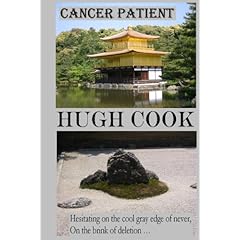
Cook’s epic plan for a sixty book series was accordingly cut short, and after publishing the brilliant conclusion to the Chronicles, The Witchlord and the Weaponmaster, he went on to champion print-on-demand technology and electronic formats, constantly moving into newer and stranger worlds with his writing. He was among the first authors to publish works through Lulu.com with the Oceans of Light trilogy and later, Cancer Patient. Even so, the Chronicles remain Cook’s legacy, and copies of these volumes continue to fetch outlandish prices in second-hand book markets around the world (my own collection must be worth a small fortune, according to Amazon – but it is most certainly not for sale).

Cook was diagnosed with Non-Hodgkins Lymphoma in 2005. He endured months of chemotherapy and radiation treatment in Auckland, which briefly sent the cancer into remission. During this ordeal he wrote Cancer Patient, a collection of musings, poetry and recollections which document his struggle with the disease and what he learned about life and the human condition in the process.This book is available for free as an online e-book or as a download from zenvirus.com, one of Hugh’s many websites. Unfortunately in 2007 the cancer returned, and Cook passed away on November 8th, 2008, after bravely battling the disease for so many years. It is a testament to the scope of his fanbase that the obituary I wrote for him, which was published in the New Zealand Herald and which I posted to my blog in December last year, remains one of my most frequently visited pages.

Ultimately, Cook was both Wordsmith and Warrior. Poems, stories and characters were his tools and his weapons. He wrote with a passion, producing fiction at a prolific rate, and the English language would be greatly enriched if all the words and terms he had coined in his oeuvre were to be introduced into common parlance. He fought to find new ways forward in the publishing world, exploiting technologies that are only now starting to establish their true place in the electronic market. He maintained his integrity as an author to the very end, determined to always share the stories he had to tell, and not those that others wanted him to tell. At the end, he fought an unseen enemy – fought it and beat it, if only for a short time. Even in this, he had a story to tell, one that may not have been able to completely defeat that insidious foe, but which may yet bring comfort to others who face those same demons at some stage.

For those of you interested in reading Hugh Cook’s work, samples and full-length copies of some of his books can be found at zenvirus.com. Also, keep an eye out for a reissue of The Walrus and the Warwolf, due for release in 2010 by Piazo Publishing, with an introduction penned by China Mieville.
Walrus is recognised by Hugh’s fans as his finest hour, and well worth a read by any lover of epic fantasy. To quote Mieville again, “To honour the memory of this wonderful and generous-spirited writer and man, those - too bloody few - of us who know his work should do all we can to bring it to the world's attention.

Hugh Walter Gilbert Cook (1956-2008): Wordsmith; Warrior; New Zealander.

Man’s first death is the random potential
Of aeons before conception,
And the surf, merging life with form,
The surf is creation and rebirth.

(Cicada Sun, Landfall #118, 1976)

I would like to thank Colin Smythe, China Mieville, and the Cook family for their kind assistance in preparing this article.

Friday, August 28, 2009

'Toothless' Trailer

In a quick update to my last review, JP Moore has released a trailer for the Toothless audiobook, featuring the artwork of Scott Purdy and music from The Monster Symphony by Devin Anderson.


Enjoy!

Sunday, June 28, 2009

Podcast Novel Review: "Lost Gods" by Drew Beatty

I love a good supernatural urban fantasy, and I also love a good old-fashioned grifting story. It's rare to see the two genres cross, and I wasn't sure that it could possibly work. But after listening to the first chapter of Drew Beatty's Lost Gods, I was left hoping that such a wonderful hybrid creature could indeed exist.
I was not to be disappointed. Lost Gods starts out on a very low key, but it consistently cranks up the stakes as the story progresses. What begins as the story of two shady characters who share a dark secret planning a con that will set them up for life evolves into a struggle between ancient and (almost) forgotten powers, that threatens everything we know and love. Without wanting to step into spoilerville, I can say that this story delivered a whole lot more punch than I was expecting, and did so in clever, unexpected, and thoroughly well-thought-out ways.

Beatty maintains a relaxed grip on his prose and dialogue thoughout, rarely breaking a sweat as the fate of the characters and, finally, all of us, is thrown into the swirling chaos that he creates. His narration is likewise laid-back and unhurried, which makes for easy and pleasurable listening. Beatty's confidence with his work and with the mic shows through in a well-presented audio production that any amateuer podcaster ought to be proud of.

Lost Gods is equal parts dark supernatural thriller, grifter tale, and black comedy. The final chapters wind up towards some of the best twists I have come across in storytelling for a long time, particularly in podcast novels. For sheer "I-never-saw-that-coming" value, this is a winner.

I rate Lost Gods 4 Stars out of 5, purely for it's dry and original entertainment value. Fantastic stuff.

Complete at 21 Chapters, Lost Gods can be found at Podiobooks.com, and Drew Beatty can be found on Twitter or at either of his homepages, LostGods.ca, where readers can also download PDF chapters, and drewbeatty.com, where Drew keeps a blog and updates on the podcasting world (Hat Tip: Ron Earl thanks for picking up the linky foible). There is a book version of Lost Gods in the works too; check out Beatty's homepage for more details.

Saturday, June 20, 2009

Podcast Novel Review: "Chasing the Bard" by Philippa Ballantine

A couple of weeks ago I was lucky enough to meet a couple of awesome people at a little library in Dannevirke, in the frosty Tararuas, about three hours north of Wellington, New Zealand. Podcasters Tee Morris and Philippa Ballantine were surprised that I made the drive when there were opportunities to catch them in Wellington, but it may come as no surprise to anyone with a two-year-old and a busy family life that getting away on the weekend is sometimes easier than doing things during the week. Thus, the drive to Dannevirke. Ah, road trips.

Philippa Ballantine is New Zealand's only podcaster (that we know of - yell out if this is a misconception, please), and she is also now rightly referred to as "Award-Winning Novelist Phillippa Ballantine", in light of her recently being presented with the Julius Vogler Award for her podcast novel Chasing The Bard.In order to fully prepare for this meeting, I started into CTB in earnest. I was dubious at first, always having been more of a fan of dark, gritty sword-and-sorcery fantasy than the fairy kind, but I was quickly disabused of my preconceptions.

Ballantine writes fantasy that is enchanting and compelling, weaving the multiple worlds of the fey and human together with grace and skill. The fantastic realm that lies but a breath beyond our own is composed with delicate crafting, Ballantine's worldbuilding carefully disguised as setting and character. And when the need arises, Ballantine can turn to the dark and brutal with as much skill as she writes of charm and love.

The story is based loosely around the life of the great Bard, William Shakespeare, whose destiny is wound together with the immortal faerie realm and its epic struggles that span the rise and fall of entire human civilisations. To say more would be to spoil the grand, intricately woven tapestry that is the plot, and I wouldn't do that to you. Suffice to say that the blend of historical detail and fantastical elements makes for a well-rounded and deeply satisfying story-telling experience.

Soundwise, I was hugely impressed by CTB. I had started into Ballantine's previous work, Weaver's Web, a little earlier, but had to put it aside because the audio levels were too low to easily hear over the speakers in my workshop. WW is now instead slated for iPod listening sometime soon. Accordingly, I was pleased to hear that the mastering of CTB was greatly improved, and ultimately could not fault the production. While narrating and voicing many of the female characters herself, Ballantine also employed additional voice talent (including Tee Morris) for some of the parts, which lends a sense of theatre and realism to any podcast drama. The podcast also features music, atmos, and enough sound effects to augment the story without overwhelming it.

Call it cultural cringe, but I was not expecting a lot out of this podcast, and I was pleasantly surprised by just how accomplised a production a fellow Kiwi could put together. Apparently the people handing out the Julius Voglers thought so too, as did the Parsec Awards commitee: CTB has been nominated for Best Speculative Fiction, Long Form, and I wish Philippa all the best in that competition too.

I'm going to give Chasing The Bard the full 5 Stars, and not just because we both live in Wellington. This is historical fantasy that deserves to be listenened to.

And just in case you were wondering, I'm now listening to Billibub Baddings and the Case of the Singing Sword, by Tee Morris - and so far, it's just brilliant.

Thursday, June 4, 2009

Review: "Call of the Herald" by Brian Rathbone

Originally Published at Freshly Ground on June 4th 2009

Call of the Herald is the first part in Brian Rathbone's Dawning of Power Trilogy. The complete trilogy is available as a trade paperback; so far, only the first part is in audio format, and this available free from Podiobooks.com.Call of the Herald tells the tale of Catrin, a young girl thrust into a life of legend and prophecy when the quiet world she knew is changed forever.

Rathbone builds a haunting, immersive land of fog and mystery, meticulously building towards the unraveling of that world as the chapters unfold. He writes with care and attention to the finer details of Godsland, his fantasy world, and the characters that inhabit it. Listening to this audiobook, I was hungry for a bit more pace, but when Rathbone does bring on the action, he does so with the same refined skill and grace with which he has constructed his world. Without the methodical buildup, the climactic sequences would have seemed hollow. This is the fine art of world-building at its best.

The audio production is clean and clear. Rathbone never misses a beat in his crisp narration, and lets the prose carry the flow of his characters' voices. He has also chosen, for this recording, not to use any effects, music, or ambience, so the work relies very much on both his delivery and the weight of the writing for its effect. On this subject, Rathbone has a very soothing voice, which may at times be more relaxing than is good for the listener's focus. More than once I found I had to skip back because I had been lulled away from the story by the gentle timbre of Rathbone's voice rumbling away in my ear.

Call of the Herald took a bit of time to get into, but I was rewarded for sticking with it. The story finds its pace about halfway, and is unputdownable once it really gets going.

Overall, this is a fine effort in the fantasy genre, and I would have to give it a confident 3 1/2 Stars out of 5. I'll be looking forward to hearing future installments of the trilogy, and if the books were to cross my path I'd probably get my hands on them, if only to see if they read differently in my head without Rathbone's crooning voice to carry the words.

One thing I will say is that, unlike almost every podcast novel I've listened to, Rathbone doesn't plug his own site at all, which, while refreshing, is a shame. It is only tonight, as I skim over his site, that I see there are maps of Godsland for readers to look at, which would have made the listening experience a lot clearer. Maps are a critical part of the fantasy genre, and it is a skilled writer indeed who can write fantasy without recourse to a map in the front of the book - it's also one of the things we fantasy fans gobble up hungrily. It is a credit to Rathbone's writing that I made it right through Call of the Herald without ever seeing these maps, and never felt lost. Maybe a quick word in the intro or sign-off to check out the website for maps and artwork would have enhanced my experience of the audiobook.

Well done, Brian, on a great book and a fine audio production. Looking forward to your next offering.

Wednesday, April 22, 2009

Review: "DarkAge" by Kirk Warrington

Originally Published at Freshly Ground on April 21, 2009

After finishing Phil Rossi's Crescent and waiting in eager anticipation for the final chapters of Jack Kincaid's Hoad's Grim, my hunger for more good storytelling was ravenous. I took Phil Rossi's advice and headed to Podiobooks to hunt down another great listen, and found a huge list of books that sounded like they might appeal to me.

I spent some time downloading first chapters and loading them into a playlist on my Ipod, then listened to them in the car on the way home. The ones that grabbed me made it as far as being downloaded in full, and one of those was DarkAge by Kirk Warrington.

I would love to rave about how good this was. I'd love to say that it was hilarious and satisfying and well worth the listen, just because I don't really like to sound critical. Unfortunately, for all its good points, DarkAge ultimately let me down as a listener, and I would be hesitant to recommend it.

First and foremost, let me say again that I have a tremendous amount of respect for the amount of work that goes into not only writing a book (I've done that myself - phew!) but also into doing an audio production of any scale, much less the recording of a whole book. I've made short films and worked in the film industry for years, so I know there's no such thing as a "small project". So to Kirk W and Phil R and Jack K (and Derek Gilbert, whose book Iron Dragons I'm currently listening to, and Christoph Laputka, who produces the astounding Leviathan Chronicles) who go to all this effort, and do it all for free, I tip my hat. Sometimes, however, the mark is missed.

DarkAge reeled me in from the first chords of the crunching heavy metal guitar riff that frames each episode. The basic premise is that a group of people - in this case fantasy role-players - are magically swept away into another world where they find they have come to inhabit their characters from the game they were just playing. Suddenly, the risks they were so happy for their paper-based characters to face are more than just a game; they're deadly reality. As the story progresses, the characters realise that in order to survive in this harsh world, they must become their DarkAge characters. If they don't, they won't have those characters' skills that allow them to prosper as they would in the game. The option is penury and shame at best, and death at the worst.

In terms of theme, DarkAge seems to be about the struggle for integrity of one's own self when faced with the challenges of emerging into a world that is more brutal and real than you were ever prepared for. As a teen coming-of-age metaphor, DarkAge bundles up the fears and hopes that we all had and throws them at us in a bloody, bruising haze; responsibilities can be as much a burden as a blessing, and making the wrong choices has real consequences. Sometimes making those choices, even standing up for what you believe in, can be fatal.

The narrative was linear and uncomplicated, which sadly also left the character development sorely lacking. While we knew all the characters and understood their individual motives and desires reasonably well, the need to abandon their old selves to survive tended to force them all in a single direction, even those who resisted that change.

Where this really fell down for me, however, was that the hook in a story of this nature is that you want to know: How do they get home? Without wanting to spoil the book, suffice to say that this question is never answered in a manner that satisfied me, given the hours I spent listening to DarkAge. In fact, there were far too many questions of that nature, questions that are really the guts of a story of this kind, that were never answered. Instead, the story focused on the conflicts between the characters themselves and the people they meet in the world of Merinia, and we never get to really learn about what makes this world tick. Conflict and story are all good of course, but it came at the cost of world-building and character arcs.

While this left the story open to a lot of action and adventure, of which there is plenty, and a good dose of humour, much of it fairly ribald, DarkAge ultimately feels shallow and under-developed, like watching someone else play a hack-and-slash computer game.

Warrington uses the idea that this is not a parallel world but a game world to lampoon many of the ridiculous rules that abound in roleplaying, and in that he well and truly hits the mark. (I think I'm bleeding to death! / You Idiot! Just drink a healing potion!) [Not an actual quote, but you get the idea.]

The other three key elements of the podcast - namely performance, writing, and production - also need work.

Performance-wise, while Warrington's theatrical skills leave much to be desired, he was by no means the worst I've heard. His reading of the script was deliberate and came across as forced, but he was nothing if not clear. He also handled the large cast of characters well, creating unique and distinctive, if not necessarily brilliant, voices for all of them. Some were harder to pick than others, but Warrington's insistence on writing dense lines of verbiage to follow almost every mouthful of speech ensured that we always know who's talking.

Yet it was this verbosity which also made me grit my teeth while listening. I would think to myself, I don't need you to tell me that he said that with annoyance, I can tell from the dialogue and the tone. This over-writing slowed the story down and seldom added any illumination. I think it may have improved towards the end, however. With the help of a brutal editor this book could be tightened up tremendously and be a snappier, more captivating piece of sword-and-sorcery than it currently is.

The sound effects were the real low point. Like I said, good on you Kirk for even getting this far. I've been spoiled by podcasts like Leviathan, Hoad's Grim and Eden, which all have stunning audio production. But the cries of the demons in the last chapters just made me laugh, or at least groan. Any tension that had been built in any scene that those demons squealed in just went down the drain as soon as that noise came through the speakers. Surely there must be better Creative Commons 'Demon Screams' out there for people to use. Kincaid, any suggestions?

Overall, I'll say that I'm glad I stuck with it to the end, but it was getting to be a struggle, and I really wanted to see them get home. Given the ending, however, I guess there is a sequel in the wind. This had the potential to be a good read, but ultimately it failed to convince me. Unless you really love the "whisked away into a parallel/divergent universe" concept, I wouldn't recommend DarkAge. The high point is Warrington's ability to satirise the genre and the RPG world, and worth a listen if you like that sort of thing. I know I laughed more than I usually do reading fantasy or sci-fi, and for that I'm grateful. And while I'd like to know what happens to Kev and Vaughn and Sake and Jer, and James and Hades, I don't think I'll be rushing out to listen to the sequel.

2 1/2 Stars.