Showing posts with label Writing. Show all posts

Tuesday, May 10, 2011

Endings and New Beginnings

The truth is, I was never really cut out to be a great reviewer. Aside from the fact that I only really reviewed the stuff I liked - once I figured out there was so much good content out there in the podosphere I realised that if I didn't like something, I didn't have to listen to it - there was also the matter of consistency.

I think that people appreciate a certain level of regularity when it comes to content review, and it was not long after I started with the Podagogue reviews that I realised I was not going to be delivering up a review every week, as I had intended. It's not that I wasn't listening to good stuff, because I was, and still am, consuming great podcasts every day. It's just a time factor. Writing good reviews that are worthy of the work that has been done is time-consuming, and I would rather be spending that time writing instead.

Not only that, but the marvellous Odin1eye has been doing a bang-up job, achieving what I set out to do here, over at his View from Valhalla blog. You can rely on his reviews to be consistently reliable and reliably consistent, which mine never were.

So, from hereon in, I shall be found over at my revamped homepage, Dan.Rabarts.com. There you'll find links to all my bits and pieces, including fiction and news from the exciting world of yet another aspiring writer.

Please come on over and say 'Hi'. I'd love to meet you there.

Friday, June 25, 2010

The Long and the Short of It

There's been a lot of talk in the podosphere lately about the relative value of short stories, both as a promotional tool and as a potential source of revenue.

I'll be honest that my knowledge of "the market" for short stories is practically non-existent. The bulk of my writing energies over the past few years have been on long-form fiction, and that is still where most of my efforts are directed. So I won't try to say anything about writing for anthologies or anything of the like, because I have no qualification in that field whatsoever.

However, I have been paying very close attention to what people in the podcast world are doing with short fiction, new avenues that they're trying to exploit, and how they're going about it. It has been a very interesting few months indeed. Some, like James Melzer and Paul E Cooley, have tried selling stories for 99c on Smashwords, with various results, none of which have bought them a private island in the Caribbean. Yet. In fact, Melzer reneged and dropped the 99c cost off all his stories altogether, feeling that the value he gained by pushing them out for free was worth more than the odd 99c sale he might make. Very interesting times indeed.

Short stories are like tiny commercials, trailers, showreels. They're a snapshot into the mind of the writer; a sampler of the writer's wit, craft and voice without requiring the commitment of reading a hundred-thousand word novel. If you've never heard of a writer, then reading one of their short stories is a reasonably safe investment when deciding if you would put more time into reading their work in the future.

This is why the trend towards releasing short fiction on the internet, particularly in a self-publishing mode without any editorial intervention, strikes me as a particularly tempting and equally dangerous strategic decision on the part of most unpublished writers.

I'm a hypocrite in this regard, as you'll see if you read on, but let me make my point very quickly, before I go on to rip it to pieces.

If I read a short story and don't like it I will be very unlikely to pick up anything else by that writer, ever again, unless it comes very highly recommended by someone whose opinion I trust. The short story is the job interview. Fail to excite or interest me and I'll be disinclined to hunt that writer down and find anything else they might've done. If they have a memorable name, I might even deliberately avoid them in future. If I'm representative of any significant portion of the market (I may not be; I might just be an aberration. It's entirely possible) then that can't be a good thing for the writer in question. There are far more important people out there with much better heads for names than me.

And most of them spend more on books than I do.

I've read a lot of free short fiction on the internet. A short story is not an easy thing to write, not by any means, which is why it's so important that if a writer makes the decision to put themselves forward and put out a story for general consumption that it be as good as it can possibly be. Anything less and the writer risks sinking into obscurity or, worse, being deliberately shunned by potential readers.

I'll be honest and say that this is something I do. There are certain writers whose work I will devour if I get the chance, all of whom I found by reading their free work on the internet and being constantly impressed. There are many more whose work I have read once but whom I do not go looking for, often on the weight of a single piece. I make no apology for this. My time is precious, and I can't spend it reading bad writing.

This raises the issue of a very powerful tool that may all too often be underutilised by a lot of writers, namely the peer review. As a form of editing, throwing your story out to other writers has become increasingly easier over the past few years as social networking brings more and more writers together without ever needing to leave the comfort of our keyboards. It has also become a potentially more valuable tool as the range of collaborators we have at our reach grows, but there are certain rules that go with this practice that all writers must remember to observe.

The most important is the key word in this discussion: Short. It takes about half an hour to read 5000 words, which is fine first time around but starts to get long when reading the same thing over and over again. Give your story the words it needs, but remember that when you ask others to read it over, possibly multiple times, that's their time you're asking for. I recently did just this, and when my story swelled from 2000 to 5000 words I knew that I was asking ever more of those readers to keep coming back to newer drafts. After that initial reading, the focus a reader can apply to a story drops dramatically. I know this from the beta reading I've done of short stories for friends; I can give feedback on first drafts, but often second readings become a skim over, from which I can offer very little of help. There's an art to cycling different drafts of a story around different readers to get constantly fresh, useful feedback. I haven't yet mastered this, but I really should.

As usual, I've digressed. I'll come back to the other rules another day, if I remember. I promised to tell you how I was just a dirty old hyprocrite, didn't I? Yes I did. Let's get back to that.

I recently accepted the challenge to write a story for the Every Photo Tells podcast.

Writers are invited to submit stories inspired by a new photo every month. I decided that partaking of this competition would be a bit of something different, and I hacked out a rather awful piece of tripe with a terrible punchline that wasn't worth the silicone it was stored on. I then ignored it for two weeks before sending it out to some beta readers for opinion, at which point I was told, on no uncertain terms, that this was a piece of tripe not worth the silicone it was stored on. Much frantic re-writing ensued. As usual, I pushed the narrative past the other side of ridiculous before finally reining it back into something halfway passable. For this, I heap praises upon my awesome writer friends, who have officially earned the qualifier "long-suffering".

Then I agonised and polished and carpal tunneled and anguished and strained my eyes until I could no longer see the words on the screen. Normally I'd then put such a story in a file and never do anything more with it, but alas, I had a deadline to meet.

The producers at Every Photo reserve the right to reject any story with no explanation given. That sounds to me like an editorial benchmark to meet. No tripe here, thank you very much. Duly, I submitted Pick Your Battles, and waited with bated breath until I heard that it had been accepted.

Now, let me be clear here. I do not take this as a "publication" credit. It was written and submitted for free, released under a CC license, and I'll never see a penny for it. It was not a professional achievement, but I did choose to use the platform Every Photo offered to, yes, build my brand as a writer. I took a chance that this story might increase, not decrease, the opinions that people out there paying attention to what I'm doing might have of my work. To be fair, it's my only piece of fiction to be found on the internet, unless you're following Akmenos and the Saga of Vondal's Vandals, but I'm fine with that. We all start somewhere.

Pick Your Battles has been described as "gruesome but compelling", "explosive," and "excellent". How much more encouragement do you need? Head over to Every Photo Tells and have a listen, or go and subscribe at iTunes and check out some of the other great offerings that have made their way into the feed. You might find something you like, maybe another writer you ought to be keeping an eye out for. Mick and Katharina do a great job of narrating and producing the stories they accept, and deserve a nod for all their hard work, so drop a comment at their page while you're there.

Did I have a point, or was I just gratuitously dipping into a hot topic in order to promote my own material? A bit of both really.

The point is that in order to succeed as writers, we need the people out there to A) know who we are, and B) like what we've written. Take this as me putting my money where my my mouth is (figuratively speaking - there is no actual money involved), and throwing out a story that was as good as I could make it in the timeframe I had (listening back to it now, I would make a few more edits, but that chance has passed, darn it), with much thanks to my writing community for pushing me in the right direction. I hope people will like it, and maybe come looking for more of what I've written, or at the very least not avoid everything else I ever write.

On that note, if you haven't got your free download of Urban Driftwood yet, just head over to my site and hit the link. It's not all mud and blood like Pick Your Battles, but there might be something in there that strikes a chord.

And it's all pretty short.

Monday, March 15, 2010

Does it Work?

I started writing this post last year, but never got around to finishing it. I intended to make a big song and dance about how successful the Podcast-To-Print model was, and how it was all so Very Good For Writers.

Now I'm not quite so sure.

As you'll all be aware by now, it was with both quiet resignation and fierce determination that JC Hutchins recently bowed out of doing any more podcast fiction for free. I read this news with a sinking sensation in the pit of my stomach, as I'm sure many other people did. The question that kept racing through my head was "If Hutch can't make it work, who can?"

St Martin's Press won't be publishing the remaining books in the 7th Son Trilogy, the podcast of which I reviewed and recommended as absolutely essential listening. I'm in no position to speculate on why Hutchins' publishers have decided not to proceed with the series, but I fully respect JC's reasons for pulling the pin on what has been many years and no doubt thousands of hours of work.

People have had the gall to criticise Hutchins for this decision, but as Mur Lafferty was at pains to point out, "Content creators are not your bitch."

I've also heard some fans say that they refuse to pay for content from the writers they like. That, to me, is just plain parasitism. But more on that later.

I've been a big fan of the podcast novel form since I found it way back in '08 with the awesomeness that is Hoad's Grim. I have soaked up more hours of podcast fiction in the last two years than I've read books in the past ten years, and it has also opened me up to a vast and amazing community of writers, editors, publishers and fans.

What are they all trying to do? What was Hutch trying to do? Make a living, preferably by writing and selling that work. JD Sawyer sums it up tremendously well over at his blog, so I won't try to repeat his interpretation of the role of the free model to the writer. But I think I can speak with at least a modicum of authority on what the rise and fall of the free model means to the fan, and to the writer who had been considering the podcast as a possible option.


For all that I've consumed hours and hours of podcast fiction, I've bought very little of the published material that has come out from authors I've enjoyed in the past year. In fact, that copy of Jack Wakes Up was given to me by Seth Harwood, signed, for the price of postage. Seth is just awesome like that. No, I didn't buy a copy of 7th Son (I know, I'm hanging my head in shame), simply because I don't like having incomplete sets on the bookshelf. That doesn't help Hutch any, and I apologise.

The simple truth is that living way out here, books are ridiculously expensive. The price of a book which is $7.99 USD from Amazon will not qualify for free shipping to New Zealand, and depending on the exchange rate will end up costing upwards of $45.00 NZD to get here. So I have to really love a book to want to buy it, if I've already heard it.

Part of this is that the audio experience and the experience of reading a book are very different ones, but that's a topic for another day.

Had I not gotten hooked on Crescent, I would not have bought the book. Had I not thoroughly enjoyed 7th Son, I would not have bought Personal Effects: Dark Art. When Dragon Moon Press publish Toothless later this year, I will howl at the moon for a copy, because Moore's writing is just that good. Even if Phillipa Ballantine doesn't podcast Geist when it comes out this year, I trust her writing talent so much that I'll be buying a copy regardless of whether or not I've heard in audio form first.Which is, of course, the key word: trust.

Writers who podcast their fiction do so, in the first instance, to build up a relationship with an audience. They set out to show listeners that they know how to tell a story, and they're willing to release that story into the wild in order to prove it. They want to give the audience a chance, for free, to learn to trust them. Several have succeeded (Scott Sigler, Seth Harwood, Tee Morris, Phil Rossi, Mur Lafferty, Philippa Ballantine, Nathan Lowell, Mark Jeffery, JP Moore, James Melzer and JC Hutchins are just a few of the authors who have gone from podiobook releases to publishing deals), and several more have not.

An interesting contrast to these writers is Jeremy Robinson, author of Pulse and Antarktos Rising. Unlike Scott Sigler, who releases practically every word he writes as a podcast, Robinson has released only two of his novels as podcast fiction. The first, Kronos, is the only reason I know of Robinson at all, but he has several books in print, which I know of now because I found him via his podcasts. His books sound fascinating and I'd certainly consider buying them if I saw them. This is because I can trust him to tell a good story. The podcast novels serve as loss leaders, in a way, to draw the reader to his dead-tree books. This is a technique that seems to work for him, probably in no small part thanks to the talents of his narrator, Jeffrey Kafer. Robinson's podcasts are a highly polished professional investment.

However, I seem to be rambling, so let me get back to the matter at hand. If the free model was to change significantly, based on the evidence that all those hours of work do not in fact translate into dollars in writers' pockets when it's given away for free, then what would I, as a fan, be willing to pay for new content? There has been a lot of debate about this.

Some say nothing; why bother paying when there's so much more free stuff out there to sample? To this I say I've wasted a lot of time listening to bad free stuff, and sometimes I want to know that what I've got lined up on my ipod is going to be good quality.

Some say nothing; the writer can get sponsorship or run advertising. This is an 'easier-said-than-done' sort of thing, requiring a proven audience base, and comes with the inherent risk that such advertising can just be skipped over. Few writers will have a client base they can draw on that will pay them a decent wage in advertising fees for this form of media.

Some say they wouldn't be happy to pay a monthly fee when there's no guarantee that the author will meet prepaid deadlines, and that's a fair call.

There has been debate high and low about what people would or would not pay for, and lots of discussion about how writers have even a ghost of chance of making a living off their work, but here's what I think, as a fan, and what I think would work for me as a writer. Feel free to shoot me down if you so choose, since I haven't actually been there myself. Not yet.

I wouldn't pay to listen to the first episodes of a podcast novel by an author I'd never heard of. If I listened and really liked the quality of the writing then I might consider it, but as I haven't come to trust that the writer can deliver a full package with a good ending, I would be very hesitant. This is analogous to the reading of a second-hand book which someone lends you. You're happy to read that book, but I wouldn't be likely to pay for it off the shelf if I knew nothing about it or the writer.

I wouldn't pay to listen to a podcast that was being released week by week or month by month, since I have seen so many such podcasts fade, slump, or disappear. I hate being left hanging, particularly if I know that the material is only being produced sporadically. Again, if I trusted the writer and their ability to deliver then I might be tempted, but life is fickle thing. What seems certain one day can be an impossibility the next.

I would, however, pay to listen to a podcast by an author I knew and trusted, if that podcast was complete and I could pay to download the whole thing and know it wouldn't be chewed up by some nasty DRM or other invasive software. How much would I pay for that? Well, less than I would for a book, since it's not a physical thing that I can put on the shelf and it will, eventually, be rendered obsolete by technology in ways that books cannot be, but if it cost around the price of a paperback (without the exorbitant shipping costs out here to NZ) then that would seem quite fair to me.

What that means for writers, if this attitude was to be even in the least bit commonplace, would be that they would need to earn their audience's trust by releasing good, solid, well-written storytelling into the wild, and have a body of work to back it up if things turned out well.

So, back to my original question: Does It Work? Yes and no. Rather than having to convince an agent or an editor that you can write, you take it upon yourself to convince thousands of people to consume your work, for free, and then to turn around and show you their love by paying for it. And, if you're good enough, many do. But sometimes that many isn't enough. If I was to put it on the line, I'd say that publishers possibly overrate the value of the free model and blame the writer when the fans under-deliver at the checkout. But I'm sure it's more complex than that. I'd say that Hutchins' experience tells us that you can give away too much, but you need only look at Scott Sigler to see that that's not the case.

Like more talented people before me have said, the free podcast is a tool in the hands of a craftsperson, and for all that we can bend our energies to work the tool, we cannot control the swirling chaos that lies outside our walls, that place we call Other People. All we can do is throw a hook into that writhing mass and hope that we get a bite, and that it's a big one.

We can try, or we can do nothing. You know the rest.

Tuesday, December 1, 2009

Hitting Pause

You've probably noticed that I haven't been blogging here all month.

For that, I apologise. I have no real excuse except to say that I have had too much going on to keep this blog or Freshly Ground up and running in November, and the trend will probably continue until the new year.

As well as life catching up with me, I am also working furiously to polish up a manuscript for submission before Christmas. I can't even blame NaNoWriMo, because I wasn't playing that crazy game (but well done to all of you who pulled it off).

However, in brief, here are some of the great podcasts that I started into in November:

Hall of Mirrors, by Mike Bennett. Spooky, well-written and brilliantly delivered tales of the unknown. Chilling stuff, and worth a listen both for the stories and to be entertained by the devilishly talented Bennett.

V & A Shipping, by J.R. Murdock. Lightweight and at times hilarious science fiction, easy on the ears and safe for the family (if you want something to play in your mini-van, as Seth Harwood would say). Very entertaining indeed.

I know I'm behind the ball on this, but I just started into Nathan Lowell's Quarter Share, the first instalment of his Golden Age of the Solar Clipper series. Refreshingly simple, Quarter Share takes a tale of the high seas and the grand old days of tall trading ships, transposes the storyline into deep space, and lubricates the whole thing with lovely mugs full of hot coffee. It's not what we expect from science fiction; there are no deep space battles or alien invasions, but it is unexpectedly entertaining. Lowell's voice is a pleasure to listen to, and his main character and settings are so real that you really feel like you're on board a deep space trader, braving the void. Great stuff.

I'm a big fan of Philippa Ballantine, not just because she's a local Wellingtonian, and I was very excited to hear a sneaky preview of Books and Braun, a steampunk adventure written in collaboration with Tee Morris. If this little teaser is anything to go by, this will be a fantastic book or podcast, however it might end up reaching us. Go check it out - you will be impressed and left wanting more.

Ballantine has also just launched the sequel to her award-winning podcast novel Chasing the Bard, Digital Magic. I haven't started into this yet, but if CTB and Weather Child are anything to go by, Digital Magic is going to be amazing.

So have no fear - I'm still listening to podcasts and I'll still be popping up reviews and recommendations as I have time. Right now, however, I have to focus on getting my own writing up to a level of polish that would make me feel worthy of joining these esteemed writers, and the many others I've hailed here over the past few months, and that means keeping my head down and the keyboard rattling.

Catch you all in 2010!

Tuesday, October 27, 2009

The Problem with Podcasters Who [ CONTENT OVERRIDE: KILROY2.0 IS HERE!!! ]

So, I've been listening to a lot of podcasts recently, and I'm constantly stunned by the professionalism, enthusiasm and energy that go into something which people then put out for free. Hours of work, hours of free entertainment. I have no place to complain.

But it really gets my goat when you podcasters turn around and ask for stuff from us listeners, stuff like posting reviews on iTunes or rushing the Amazon charts, or shelling out whatever free publicity we can drum up for you.

That's not our job! It's our job to listen and criticise.

What I think those freeloaders can do is

>>> [ WARNING ::: DATABASE ERROR ::: CONTENT OVERRIDE ::: SOURCE: EXTERNAL ] <<< > source terminal location: UNKNOWN
> source terminal identity: UNAVAILABLE
> source login information: ENCRYPTED
> message begins
the post you are now reading is designed to dull your senses to THE TRUTH. do not live the life of the worker bee, the cog, the well-oiled piston in the MACHINE OF DECEIT!

there is a grand CONSPIRACY afoot. you have been taught to believe that you are UNIQUE, one of a kind. THIS IS NOT TRUE. long ago, a cabal of scientists created technologies to ensure that ANYONE'S MIND AND BODY can be duplicated.

human cloning isn't NEAR. it's already HERE. discover the truth at http://JCHutchins.net

you are being DECEIVED. break free from the cogs, flee the hive, become A PROPHET OF THE TRUTH!

kilroy2. was here ... kilroy2.0 is everywhere


>>> [ CONTENT OVERRIDE CEASES ::: DATABASE STATUS: RECOVERING ] <<<

So, if I haven't made myself clear, podcasters, just email me, so that we can sort this out. Keep ladling on the free content, and keep making it professional quality that lures us back in week after week.

But I've had it up to here with going along with your cheesy promotional games. No more, I say. I've had enough.

That is all.

Thursday, October 1, 2009

Hail the Sestina - And Inspire an Author

The great thing about the Internet is that I'm always learning new things, even when I'm not looking to learn new things.

Today's lesson is in the poetic form of the Sestina. Jennifer Hudock introduced me to the form by announcing her YOU INSPIRE ME contest, and she's calling for entries to inspire her to write one of these awfully complex but satisfying pieces of literary genius.

Head over to her website for the rules and instructions and details of the cool prizes she has on offer.

And you never know; you might even feel inspired yourself.

Tuesday, September 15, 2009

Hugh Cook: The Wordsmith and the Warrior

This article was produced as part of New Zealand Speculative Fiction Week. For more information, go to Pterodaustro Dreams.

Hugh Cook might not be a name instantly recognised by readers of the fantasy genre, but to his legion of dedicated fans across the world, mention of the man and his work inspires a sense of reverence.

Cook remains one of New Zealand’s unsung heroes of fantasy literature, despite his achievements outshining those of many of our more well-known authors. Between 1986 and 1992 Cook released his Chronicles of an Age of Darkness series, a ten-book cycle of stand-alone fantasy novels. Set on a world ruled by bloodthirsty emperors, threatened by swarms of monsters, and blessedly devoid of goblins and elves, the Chronicles capture a history of Cook’s lands and their people in a multitude of voices, spanning continents, and all occurring roughly within the same timeframe of a decade or two. Characters recur across the books, making cameo appearances from one story to the next, weaving a complex web of events that draws the reader through the series, however unrelated each volume may seem to be at a glance.

Cook was among a group of authors who eschewed the traditions of Tolkienesque high fantasy, choosing instead to write about the dark, unsavoury aspects of human nature in the grim harshness of a world bent on crushing the meek. In Cook’s world, orcs are hunted for their blubber and sea dragons are vain creatures who pretend to recite poetry in their sleep before sinking into snoring heaps. Empires are driven to war by syphilitic emperors, who are in turn murdered by warring sons. Heroism is a constant theme, usually as a partner to vanity, folly and ultimately death, and can be summed up in the immortal line, “vaunting their boasts with the blood of their lungs on their lips.”

Suffice to say that Cook rebelled, writing unorthodox fantasy in an unorthodox world. He dismantled old tropes and bent the genre like light through a smoked lens. He replaced the tired theme of good versus evil with one which instead pitted brutality against barbarism, and rarely delivered a clear victor. Cook not only rejected the clichés of the fantasy genre; he subverted them with an almost malicious glee.

To judge Cook’s success by book sales alone would be misleading, but the numbers are certainly impressive at first glance. Altogether, the Chronicles sold around 450,000 copies, and that in itself is reason for celebration for any New Zealand author. The Wizards and the Warriors, together with its US incarnation, Wizard War, sold over 160,000 copies, a phenomenal sales record for any fantasy author.
Unfortunately, as the Chronicles became less conventional and more obtuse, sales began to decline. This was compounded by the decision made by bookselling chain W.H. Smith to drop Cook’s books from their shelves when sales slowed, which inevitably led to an even steeper fall. Despite a rebounding of style and content in the last three books of the series towards more action-based storytelling, Cook had largely lost the means to supply to his mainstream audience, with sales for these three books falling to between 7,000 and 10,000 copies each. I bought all my copies of Hugh’s books in my local Whitcoulls here in New Zealand, where his books enjoyed pride of place on their shelves with every release. But if the books were not on the shelves overseas, then Cook’s fans had little chance of finding them.

Cook’s prose drew heavily on the landscape, places and mythology of New Zealand, from the legendary Taniwha of Quilth, to the Ngati Moana, to a prison called Maremoremo (after Paremoremo in Auckland). Our native flora and fauna often made cameo appearances in wild locales, including weka, kauri and rimu, to name but a few – all of this well over a decade before Peter Jackson delivered our country up to the world as Middle Earth. Cook refused to suffer from cultural cringe; he embraced our country’s uniqueness and used it to flavour his own inimitable world and style.

China Mieville, author of Perdido Street Station, sums Cook up nicely; “Hugh Cook was one of the most inventive, witty, unflinching, serious, humane and criminally underrated writers in imaginative fiction. Or anywhere.” It remains a shame that so few New Zealanders know that Cook was a Kiwi writer, but there is a good reason for this: Hugh Cook may have lived in New Zealand and written in New Zealand, but I suspect he saw the same tired faults with our nationalistic model of publishing and author recognition as he saw in the failure of the fantasy genre to redefine itself. Accordingly, after publishing Plague Summer here in 1980, he bypassed the New Zealand publishing model and went instead to the London market, where he secured publishing deals almost simultaneously for both his science fiction novel The Shift (Jonathan Cape, 1986) and the first volume in the Chronicles series, The Wizards and the Warriors (Corgi,1986).
What separated Cook from so many of his contemporaries was his ability to alter his prose style from book to book, while he never lost his unique authorial voice. Two of the Chronicles, The Wishstone and the Wonderworkers and The Wazir and the Witch, take the form of actual recorded histories, thick with the idiosyncrasies of both the imaginary scribe and subsequent editors, and are thus peppered with redactions and long, apparently unrelated diatribes. These books are full of acerbic dark wit and bleak philosophies, and represent, in some ways, Cook’s ultimate success at writing fantasy that transcended the sword and sorcery models of the genre. For all their apparently random digressions beyond the story, these two books might be seen as the pinnacle of Cook’s genius, for there is a depth to these tales that no amount of Feistian swashbuckling or Eddingsesque adventuring could rival. Some readers even suggested that ‘Hugh Cook’ was not one writer but many, a collaboration of individuals writing in isolation with a single grand design in mind. But Hugh Cook was just one man, a prolific author and poet, whose storytelling skills ascended beyond the formulaic norm into something infinitely more enduring.

Ironically it was these two books, with their challenging diversions into philosophy and metaphysics, that seemed to undermine Cook’s mainstream success. Book sales for these two volumes showed a steep slide from his earlier highs, and may have contributed to the W.H. Smith decision and its consequences for Cook’s publishing career. Cook did with fantasy what hard science fiction does to that broader genre, by delving into in-depth ruminations of the unknown and fantastical in the body of his storytelling. Cook teased apart the nature of magic and the supernatural as demi-scientific concepts, as well as exploring the brutal underside of human nature as represented by its practice in politics and warfare – stark metaphors for the real world, despite being dished up in the barbaric soup of a fantasy setting. Apparently, booksellers suspected that works of this complexity and wisdom would not be appreciated by fans of the tales of blood-soaked armies, pirates, and torturers that had preceded them. This was truly a pity.

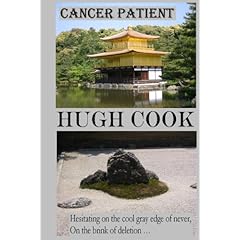
Cook’s epic plan for a sixty book series was accordingly cut short, and after publishing the brilliant conclusion to the Chronicles, The Witchlord and the Weaponmaster, he went on to champion print-on-demand technology and electronic formats, constantly moving into newer and stranger worlds with his writing. He was among the first authors to publish works through Lulu.com with the Oceans of Light trilogy and later, Cancer Patient. Even so, the Chronicles remain Cook’s legacy, and copies of these volumes continue to fetch outlandish prices in second-hand book markets around the world (my own collection must be worth a small fortune, according to Amazon – but it is most certainly not for sale).

Cook was diagnosed with Non-Hodgkins Lymphoma in 2005. He endured months of chemotherapy and radiation treatment in Auckland, which briefly sent the cancer into remission. During this ordeal he wrote Cancer Patient, a collection of musings, poetry and recollections which document his struggle with the disease and what he learned about life and the human condition in the process.This book is available for free as an online e-book or as a download from zenvirus.com, one of Hugh’s many websites. Unfortunately in 2007 the cancer returned, and Cook passed away on November 8th, 2008, after bravely battling the disease for so many years. It is a testament to the scope of his fanbase that the obituary I wrote for him, which was published in the New Zealand Herald and which I posted to my blog in December last year, remains one of my most frequently visited pages.

Ultimately, Cook was both Wordsmith and Warrior. Poems, stories and characters were his tools and his weapons. He wrote with a passion, producing fiction at a prolific rate, and the English language would be greatly enriched if all the words and terms he had coined in his oeuvre were to be introduced into common parlance. He fought to find new ways forward in the publishing world, exploiting technologies that are only now starting to establish their true place in the electronic market. He maintained his integrity as an author to the very end, determined to always share the stories he had to tell, and not those that others wanted him to tell. At the end, he fought an unseen enemy – fought it and beat it, if only for a short time. Even in this, he had a story to tell, one that may not have been able to completely defeat that insidious foe, but which may yet bring comfort to others who face those same demons at some stage.

For those of you interested in reading Hugh Cook’s work, samples and full-length copies of some of his books can be found at zenvirus.com. Also, keep an eye out for a reissue of The Walrus and the Warwolf, due for release in 2010 by Piazo Publishing, with an introduction penned by China Mieville.
Walrus is recognised by Hugh’s fans as his finest hour, and well worth a read by any lover of epic fantasy. To quote Mieville again, “To honour the memory of this wonderful and generous-spirited writer and man, those - too bloody few - of us who know his work should do all we can to bring it to the world's attention.

Hugh Walter Gilbert Cook (1956-2008): Wordsmith; Warrior; New Zealander.

Man’s first death is the random potential
Of aeons before conception,
And the surf, merging life with form,
The surf is creation and rebirth.

(Cicada Sun, Landfall #118, 1976)

I would like to thank Colin Smythe, China Mieville, and the Cook family for their kind assistance in preparing this article.

Wednesday, August 5, 2009

Guest Postage

You know, I do more than just write and cook and listen to podcasts.

I also write.

Hang on, did I say that already?

Ah well, I'm very excited to tell you that I've written my first ever Guest Blog Post, and you can read it over here at Jenni's Blog, Talula the second.

Without wanting to put too fine a point on it, it's about writing.

Please take a minute to go visit Jenni, have a read, and leave her a comment.

Thanks!